Hiring Insured Locksmiths for Property Protection
Table of Contents
Why Hiring Insured Locksmiths Matters for Property Protection
What general liability and workers' compensation actually cover
What happens when your locksmith has no insurance
How to Verify Locksmith Insurance Before You Hire
Requesting a certificate of insurance and checking coverage limits
Confirming licensing, bonding, and identity credentials
Questions to Ask Before Hiring a Locksmith
Locksmith Service Estimate Checklist: What a Written Quote Must Include
Invoices, dispute prevention, and damage claims
Rekeying vs. Replacing Locks: Which Protects Your Property Better?
Emergency, Mobile, and Commercial Locksmith Services: What to Confirm
Pre-approving a locksmith before an emergency
Emergency and mobile service: what to confirm on the call
Commercial and multi-unit work: access control and key control
A property-manager hiring workflow
Post-service key control and handover
Post-Service Key Control and Ongoing Property Security
Conclusion
Frequently Asked Questions
Last Updated: October 13, 2026
Why Hiring Insured Locksmiths Matters for Property Protection
Hiring insured locksmiths for property protection is the single most effective way to shield yourself from liability when someone else works on your locks. An insured locksmith carries general liability and workers' compensation coverage that protects your property and your finances if something goes wrong on the job.
The stakes are higher than most people realize. Locksmith work happens at your front door, your car, and your business entrance. Any of those jobs can turn into property damage or a liability dispute in seconds.
Below, we'll show you exactly how to verify coverage, what questions to ask, and how to protect yourself before, during, and after the work.
What general liability and workers' compensation actually cover
General liability insurance covers third-party claims for property damage and bodily injury that a locksmith causes while working at your property.
Workers' compensation insurance covers the technician if they get hurt on your property. This matters more than most homeowners think. Without it, an injured worker could pursue you personally for medical bills and lost wages.
These two policies do different jobs, and you want both.
Key Takeaway General liability protects your property. Workers' compensation protects you from being sued by an injured worker. A locksmith who carries only one is only half-covered.
What happens when your locksmith has no insurance
An uninsured locksmith shifts every risk onto you. If they damage your door, you either pay for the repair yourself or chase them through small claims court.
That's the part most people miss: your own insurance can become the backup plan for someone else's negligence.
A common mistake is assuming a low price means a good deal. In practice, the cheapest quote often comes from someone with no coverage, no license, and no accountability.
How to Verify Locksmith Insurance Before You Hire
Verifying locksmith insurance takes about ten minutes and three requests: a certificate of insurance, a license check, and an identity confirmation. Do all three before you let anyone touch your locks.

Requesting a certificate of insurance and checking coverage limits
Ask for a certificate of insurance (COI) before the appointment. This is a one-page document your locksmith's insurer issues that lists the policy type, coverage limits, and effective dates.
Check three things on the COI:
Policy type: You want to see general liability and workers' compensation listed separately
Coverage limits: Confirm the general liability limit is high enough to cover a full door or frame replacement
Expiration date: An expired COI is worthless. Confirm the policy is active for your service date
Call the insurance company listed on the COI to confirm the policy is real and current. A legitimate locksmith won't hesitate to give you that number.
Confirming licensing, bonding, and identity credentials
Licensing rules for locksmiths vary by state, and some states require no license at all.
Bonding is separate from insurance. A surety bond gives you a path to recover money if the locksmith commits fraud or fails to complete the work.
For identity, check that the name on the license, the COI, and the invoice all match. Mismatched names are a red flag for unlicensed subcontracting.
Watch Out If a locksmith refuses to provide a COI, gives you a photocopy with the policy number blacked out, or can't name their insurance carrier, walk away. The consequence is that any damage or injury becomes your financial problem.
Questions to Ask Before Hiring a Locksmith
A short list of questions separates a professional locksmith from a risky one. Ask these before you book, not after the technician is standing at your door.
Are you licensed, bonded, and insured, and can you send proof?
What is your full legal business name and physical address?
Do you provide a written estimate before starting work?
The answers tell you more than any review score. A locksmith who answers all seven without hesitation is one you can work with.
Locksmith Service Estimate Checklist: What a Written Quote Must Include
A written estimate is your best protection against the classic bait-and-switch. Get it in writing, and get it before any work begins.
Your quote should include:
Full legal business name and license number
Itemized labor charges and service call fee
Parts and hardware costs listed separately
If a locksmith quotes a price over the phone and then raises it on arrival, that's a dispute waiting to happen. A written estimate prevents it.
Invoices, dispute prevention, and damage claims
Keep your written estimate, your invoice, and any photos of the work area. If damage occurs, document it immediately with dated photos and a written description.
Report the damage to the locksmith in writing within a day or two. If they carry general liability, they'll file a claim with their insurer.
The Federal Trade Commission's guidance on consumer contracts explains your rights when a service provider fails to deliver as promised.
Rekeying vs. Replacing Locks: Which Protects Your Property Better?
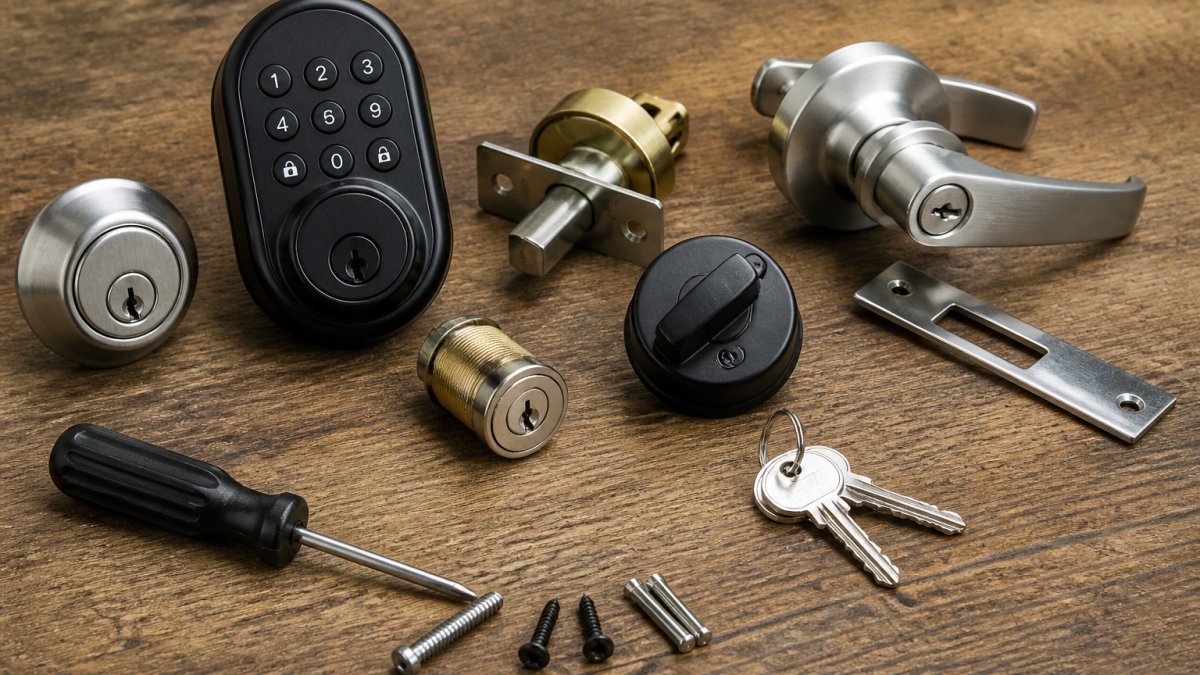
Rekeying is usually the smarter choice for property protection when the lock hardware is in good condition. Rekeying changes the internal pins so old keys stop working, while lock replacement swaps the entire unit.
Here's how the two compare:
Factor | Rekeying | Lock Replacement |
Cost | Lower | Higher |
Time on site | 15-30 minutes per lock | 30-60 minutes per lock |
Best for | New home, lost key, tenant turnover | Worn hardware, upgrades, damage |
Security gain | Blocks old keys | New hardware and features |
Smart lock upgrade | Not possible | Built in |
Choose rekeying when you've just moved in, lost a key, or ended a lease. Choose replacement when the lock is damaged, outdated, or you want keypad or smart access.
For rental property and property manager workflows, rekeying between tenants is the standard practice. It's faster, cheaper, and it resets key control completely.
Emergency, Mobile, and Commercial Locksmith Services: What to Confirm
Emergency and mobile locksmith services add convenience, but they also add risk if you skip verification. The problem is that emergencies leave no time to research credentials. The solution is to build a pre-approved locksmith list before you need one, and to run every job, emergency, mobile, or commercial, through the same screening workflow.
Pre-approving a locksmith before an emergency
Do the verification work once, then reuse it. For each locksmith you plan to call:
Confirm license, bond, and insurance (see the verification section above)
Save the legal business name, license number, and insurance carrier in your phone
Save the carrier's claims phone number, not just the locksmith's
When you're locked out at midnight, you won't have time to research credentials. You'll have time to call a number you already vetted.
Emergency and mobile service: what to confirm on the call
For emergency locksmith calls, ask for the technician's name and license number before they arrive. A legitimate 24/7 service will provide it.
For mobile locksmith service, confirm that the van carries the right tools for your lock type. A technician who shows up without the equipment for your vehicle or smart lock wastes your time and may pressure you into a higher-priced job.
Commercial and multi-unit work: access control and key control
For commercial locksmith work, ask about access control and key control systems. Business security depends on knowing who holds which keys and when they were issued. Confirm the locksmith's experience with the access control system you use, and ask whether they can integrate new credentials without replacing the whole system.
A property-manager hiring workflow
If you manage multiple rental units, run every locksmith job through the same repeatable process. This is the part most guides skip, and it is where property managers lose the most money.
Pre-qualify two or three locksmiths. Verify license, bond, and insurance once, and keep current COIs on file with expiration dates.
Get a written estimate per job. For recurring work, ask for a rate card covering rekeys, lock replacements, and emergency calls.
Document approval. Before work begins, record who approved the job, the unit number, the scope, and the quoted price. A short email or work-order form is enough.
Track access credentials. Log every key, fob, and access code issued, to whom, and for which unit. Note when each was returned or deactivated.
Rekey or change codes at every turnover. Do not rely on collecting keys from a departing tenant. Rekeying resets key control completely.
Retain documentation. Keep the estimate, invoice, and before/after photos for each job. If a tenant or owner disputes a charge or a damage claim, this file is your defense.
Pro Tip Build a one-page locksmith file for each property: approved vendor, license number, insurance carrier and policy number, COI expiration date, rate card, and a log of every job. Update it after each service call.
Post-service key control and handover
After any job, ask how many keys were cut, who has them, and whether any master keys exist. For residential security, keep a written record of every key issued.
If you manage rental property, rekey between every tenant. It's the fastest way to guarantee that a former tenant's key no longer opens the door. Change any shared access codes at the same time, and update your credential log before the next tenant moves in.
Post-Service Key Control and Ongoing Property Security
Key control after the job matters as much as the work itself.
For residential security, keep a written record of every key issued.
If you manage rental property, rekey between every tenant. It's the fastest way to guarantee that a former tenant's key no longer opens the door.
The Cybersecurity and Infrastructure Security Agency's physical security resources offers guidance on layered property protection that pairs well with good lock management.
Conclusion
The gap between a protected property and a liability nightmare often comes down to one question: did you verify coverage before you hired?
At A Ej Locksmith, we've built our reputation on being fully licensed, bonded, and insured, with 43 years of experience and a Master Locksmith.
Contact us to schedule a security assessment or an emergency call, and get the proof of coverage you deserve before anyone touches your locks.
Frequently Asked Questions
How can I verify that a locksmith is insured?
Ask for a certificate of insurance before work begins. The certificate should list general liability coverage, workers' compensation, and the policyholder's legal business name. Call the insurance carrier directly using the number on the certificate to confirm the policy is active and the coverage limits. Cross-check the business name against your state's licensing database. A legitimate locksmith will provide this without hesitation. If they stall or say the certificate is 'in the truck,' treat that as a warning sign and consider another provider.
What should a locksmith's estimate include?
A written estimate should list the service call fee, labor rate, parts and hardware costs, and any after-hours or emergency surcharges. It should state the total expected cost and note whether the price is fixed or subject to change. Ask whether the estimate includes disposal of old hardware, key duplication, and a follow-up visit if needed. Get the estimate in writing before any work starts. If the technician arrives and quotes a much higher number than the phone estimate, you are not obligated to proceed.
Is it cheaper to rekey or replace locks?
Rekeying usually costs less because the existing lock hardware stays in place and only the internal pins are changed. Replacing locks means buying new hardware plus installation labor, which raises the total. Rekey when the locks are in good condition and you only need old keys to stop working, such as after a tenant moves out or a key is lost. Replace when the hardware is worn, damaged, or you want upgraded features like bump-resistant cylinders or smart lock integration. Ask for both quotes before deciding.
Should I hire a licensed and bonded locksmith?
Yes, whenever your state or municipality requires it. Licensing confirms the locksmith has met training and background requirements. Bonding provides a financial guarantee if the locksmith fails to perform or causes damage. Insurance covers accidents and injuries on your property. Together, these three protections reduce your liability risk and give you a clear path to a claim if something goes wrong. Ask for the license number, the bond certificate, and the insurance certificate, then verify each one independently before the technician starts work.
Contact Us
Comments